01
No centavo goes missing
splitEqual rounds every share down to the centavo and hands the leftovers to the first members, one each. ₱1,000 for three is 333.34 + 333.33 + 333.33, which adds back to exactly ₱1,000.

The app my friends and I used to split expenses kept its full features behind a subscription, so I built my own. Made for the phone: add an expense at the table, split it equally or by hand, and see who owes whom update live for everyone in the group. Built on React 19 and Supabase.
3 passed · 1 failing · 1 pending · React 19 · MUI · Supabase
// snapshots
7 / 7 screenshots · zpend.vercel.app at 390 wide · names changed, bank QR pixelated
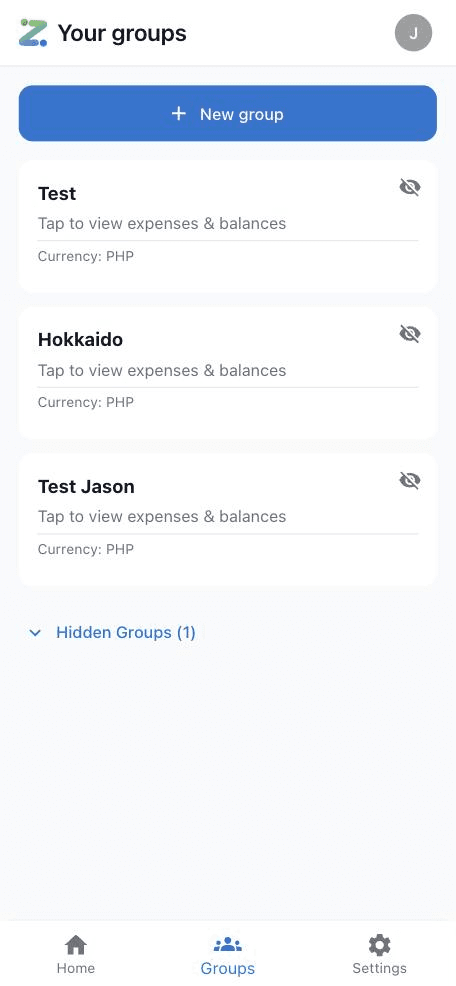
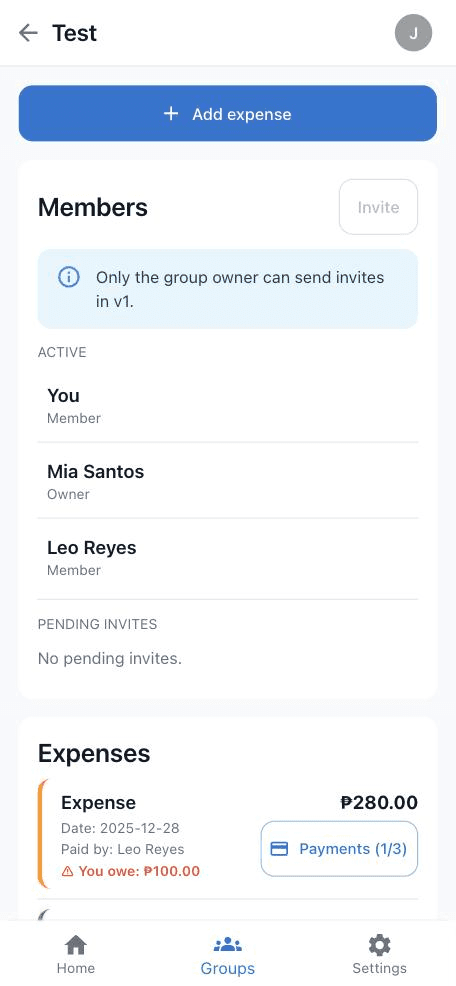
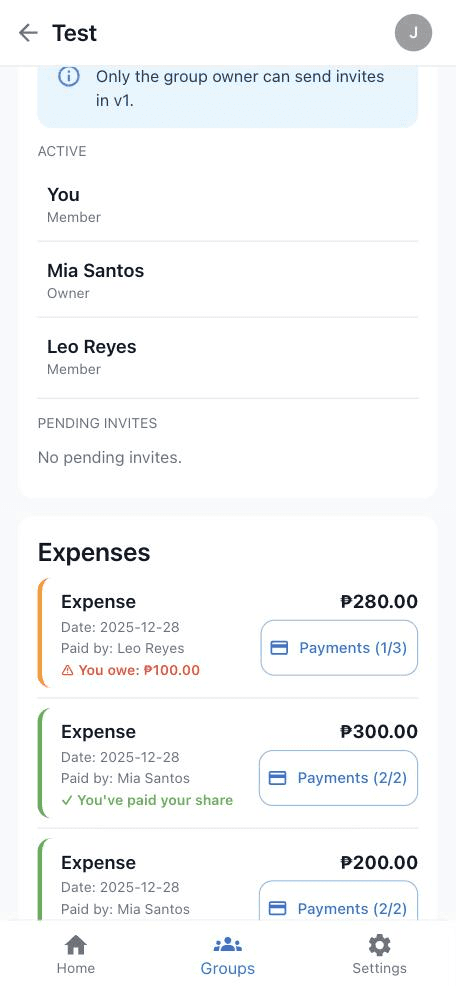
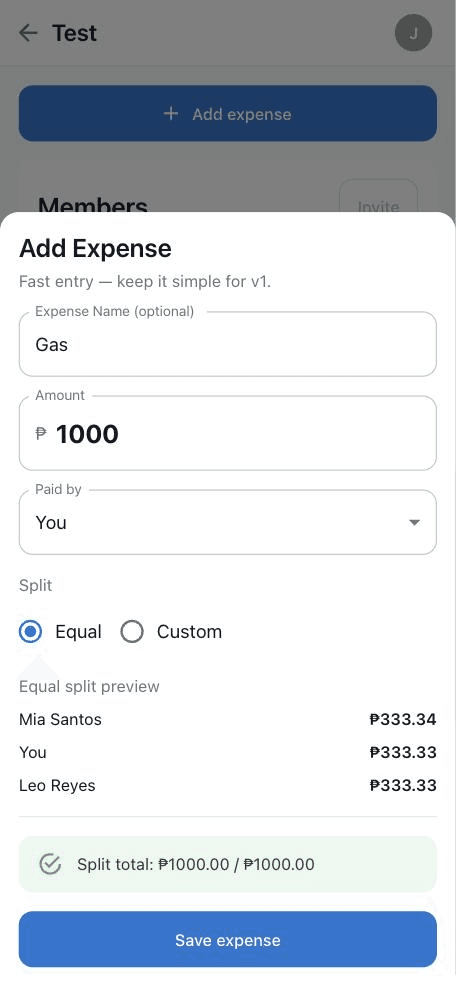
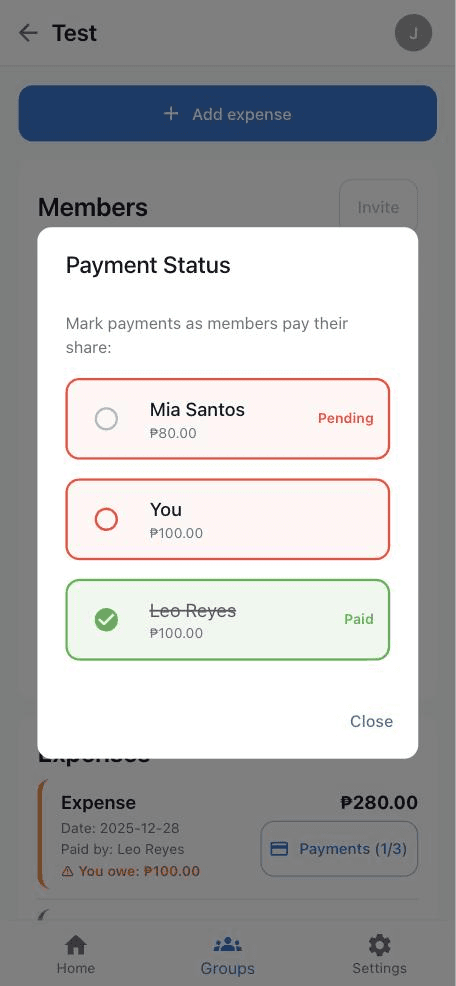
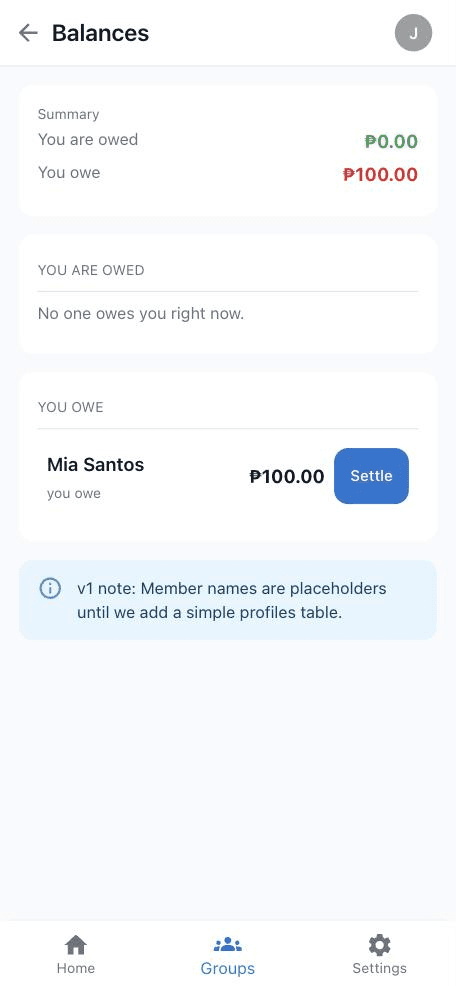
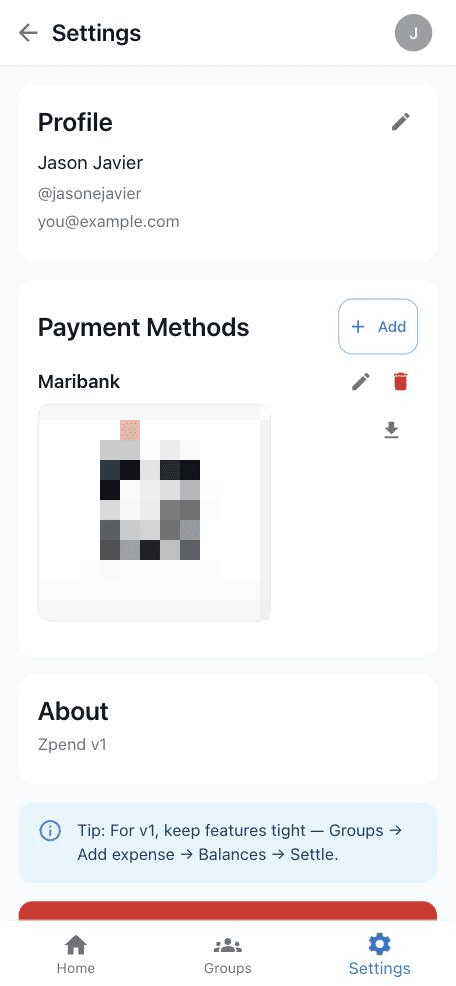
Groups, 1 of 7
// try it
The same functions the app uses: splitEqual, the net per person, and the list of who pays whom. Turn expenses on and off, then settle up.
net per person · + gets money back, − owes
// stack
8 technologies · tap one to see where it runs
Logos: Simple Icons (CC0). Trademarks belong to their owners.
// how it works
No server of my own. Each feature maps to one Supabase piece, and every group screen listens for changes, so everyone looking at the same group sees the same numbers.
| Feature | Runs on | How |
|---|---|---|
| Sign in | Auth | Email or username. A username is looked up to its email by a database function, so the client never lists users. |
| Groups | Postgres · RPC | One function call creates the group and makes you its owner, so a group never exists without one. |
| Invites | RPC · tokens | Email invites, or a public link that works many times and can be revoked. The token is kept through sign-up and email confirmation. |
| Expenses | Postgres | Equal or custom splits. Each share is a row, and marking it paid adds a payment row. |
| Live updates | Realtime | Groups, members, invites, expenses, splits, payments and hidden groups stream changes; screens refresh without a reload. |
| Payment methods | Storage | Members upload a bank or e-wallet QR; whoever owes can view and download it. |
// decisions
01
splitEqual rounds every share down to the centavo and hands the leftovers to the first members, one each. ₱1,000 for three is 333.34 + 333.33 + 333.33, which adds back to exactly ₱1,000.
02
Settling up doesn't add a separate transfer to the balance math. It marks the matching shares paid, so the same money is never counted twice.
03
Every group screen subscribes to Supabase Realtime. Add an expense on one phone and everyone else in the group sees the new balance without a refresh.
// checks
Run on the last commit. The lint failures are real and still open.
queued · 5 checks
// next